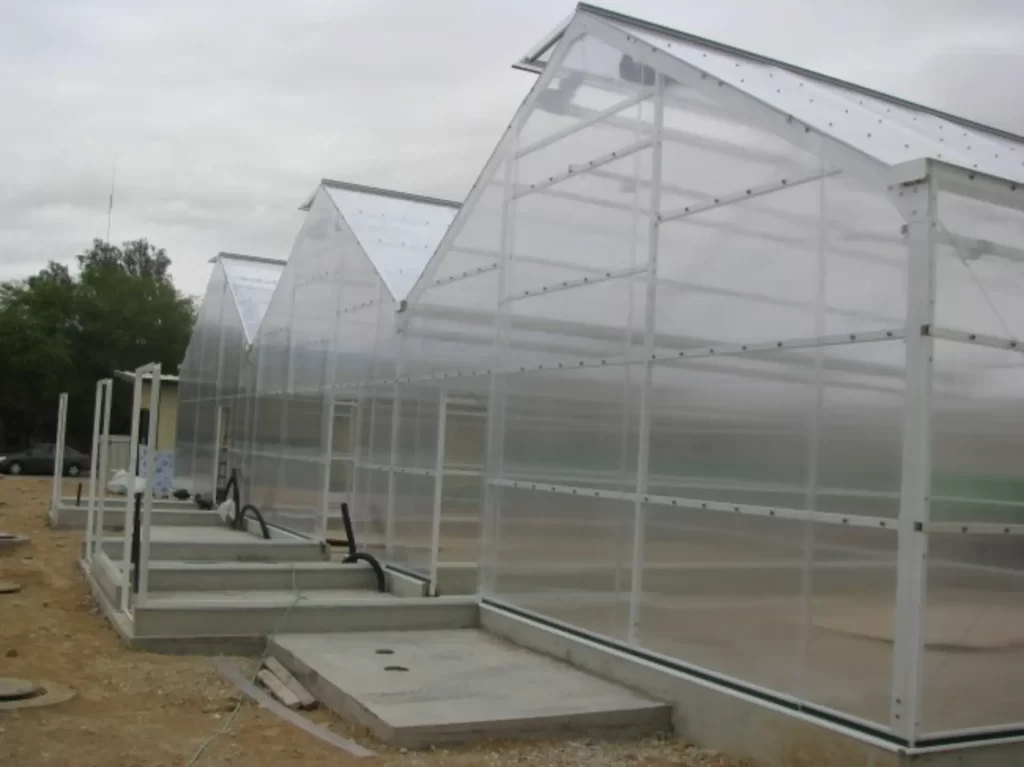
A greenhouse is a structure in which plants, trees, flowers, fruit and vegetables are typically grown. It is usually made of glass panels or plastic sheeting. Growing in a greenhouse relies on capturing the sun’s rays to keep the interior warmer than the temperature outside, an environment that supports plant development.
History of the Greenhouse
There is evidence that in ancient Rome, Roman gardeners grew vegetables inside structures made of sheets and cloth. Around the year 1500, Italian gardeners built structures for growing tropical plants brought back to Italy from voyages to different parts of the world. The first modern greenhouse was built by Jules Charles in the Netherlands. Between 1800 and 1850, large-scale industrial greenhouses began to be built extensively in England.
How a Greenhouse Works
The air inside the greenhouse is heated by the sun’s rays and cannot escape, because it is trapped by the enclosed structure. The soil also warms up and supports maximum plant development. The insulation also helps save water: the plants are irrigated with a set amount of water, which condenses on the greenhouse roof and drips back down to them. Greenhouses make it possible to isolate insects, both keeping pests outside and keeping beneficial insects inside, such as pollinators or natural pest predators. The greenhouse protects against climatic hazards such as sandstorms, and the climate inside can be tailored to the type of crop being grown. Today, some greenhouses use plastic sheeting in specific colors to filter out part of the sun’s rays that are harmful to crops. Thanks to the greenhouse, various vegetables, fruit and plants can be grown all year round, not only in certain seasons.
Greenhouses have many uses:
- Growing fruit and vegetables: the primary purpose for which the greenhouse was invented. The aim is to grow fruit and vegetables for food even in periods when they would not normally grow.
- Growing flowers: this type of cultivation has gained momentum around the world over the past decade. The greenhouse allows flowers to be grown even in cold periods when they would not otherwise bloom. Israel is a major exporter of summer flowers to Europe during the autumn and winter.
- Growing trees: cultivating tree species that are dwindling in forests due to excessive logging. The aim is to raise delicate tree seedlings in the greenhouse and, once they have grown a little, transfer them to the forests, where they continue to grow.