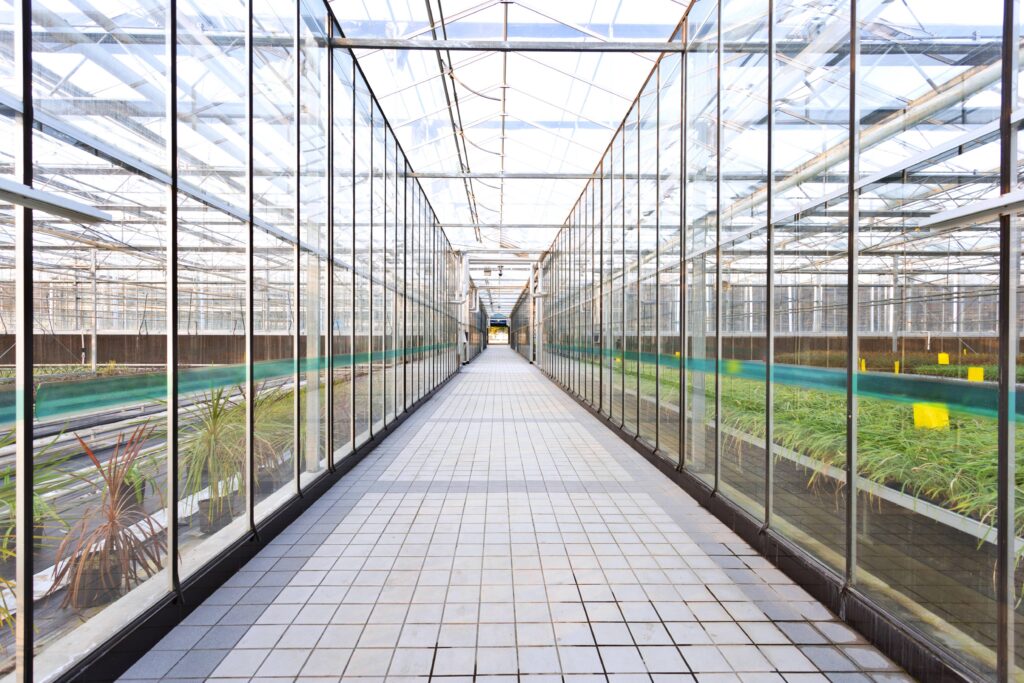
An agricultural greenhouse is one of the most important and innovative solutions developed in the world of agriculture to give growers complete control over the growing environment. Using enclosed structures clad with transparent materials such as polycarbonate or specialized plastic film, a wide range of crops can be grown – from vegetables and fruit to flowers and rare trees – while maintaining optimal conditions throughout every month of the year.
An Agricultural Greenhouse – Far More Than Shelter for Plants
The main purpose of an agricultural greenhouse is to give the plant a controlled environment in which temperature, humidity, light and ventilation can all be managed. The sun’s rays penetrate the structure and warm the air and the soil, but the heat cannot escape thanks to the enclosed greenhouse envelope. The result is a stable, comfortable internal climate – even when a stormy winter or an extreme summer is raging outside. The greenhouse gives crops optimal protection against harsh external conditions and allows growers to guarantee a continuous, stable supply of produce.
The History of the Agricultural Greenhouse
Simple greenhouse structures have accompanied humankind since ancient times. The significant development, however, began in 17th- and 18th-century Europe, where architects and scientists designed dedicated greenhouses for tropical plants. The real revolution took place in 19th-century England, where large, complex agricultural greenhouses were built for commercial purposes. Since then, greenhouses have become an integral part of advanced agriculture worldwide. In Israel, the greenhouse has become a symbol of agricultural innovation, with growers from the Negev to the Galilee using advanced technologies to produce high-quality crops even in desert regions.
Environmental Benefits of an Agricultural Greenhouse
An agricultural greenhouse does more than protect plants from cold, extreme heat or wind – it also saves water thanks to the internal cycle of evaporation and condensation. In addition, pesticide use can be reduced by controlling the entry of pests, or by precisely introducing beneficial insects for pollination or biological pest control. The result: green, environmentally friendly agriculture.
A further advantage is the ability to grow crops out of season. Fresh vegetables can be supplied in winter and flowers in summer, meeting the needs of the local and international markets at any time of year. Greenhouses also help growers cope with the effects of climate change by creating a stable, controlled environment that does not depend on the weather.
Technology in Advanced Agricultural Greenhouses
Today, many agricultural greenhouses are equipped with smart technologies: computerized irrigation systems, automatic climate control, sensors that monitor environmental conditions, and even small robots that tend the crops. Special filtering films make it possible to control the wavelengths of light entering the greenhouse – preventing radiation damage to the plants. Some greenhouses are controlled remotely via smart apps, allowing the grower to track every parameter even when away from the field.
Some greenhouses run on renewable energy, using solar panels to generate electricity for their systems, which reduces dependence on grid power and contributes to environmental protection.
Diverse Uses of an Agricultural Greenhouse
- Out-of-season vegetables and fruit – growing produce all year round, even in extreme seasons.
- The flower industry – a steady supply of flowers for the local and international markets.
- Preserving rare trees and varieties – nurturing sensitive seedlings for forest and nature restoration.
- Agricultural research – research greenhouses allow crops to be tested under controlled conditions for scientific experiments.
- The cosmetics and pharmaceutical industries – growing medicinal plants and essential oils for use in medicines and natural cosmetics.
Summary
An agricultural greenhouse is far more than a farm building – it represents a vision of advanced, clean and precise agriculture. It makes it possible to secure a supply of quality food, reduce resource consumption, cut waste and minimize environmental impact. Modern technology turns the greenhouse into a powerful tool in the hands of today’s grower, connecting science, sustainability and excellent produce all year round.