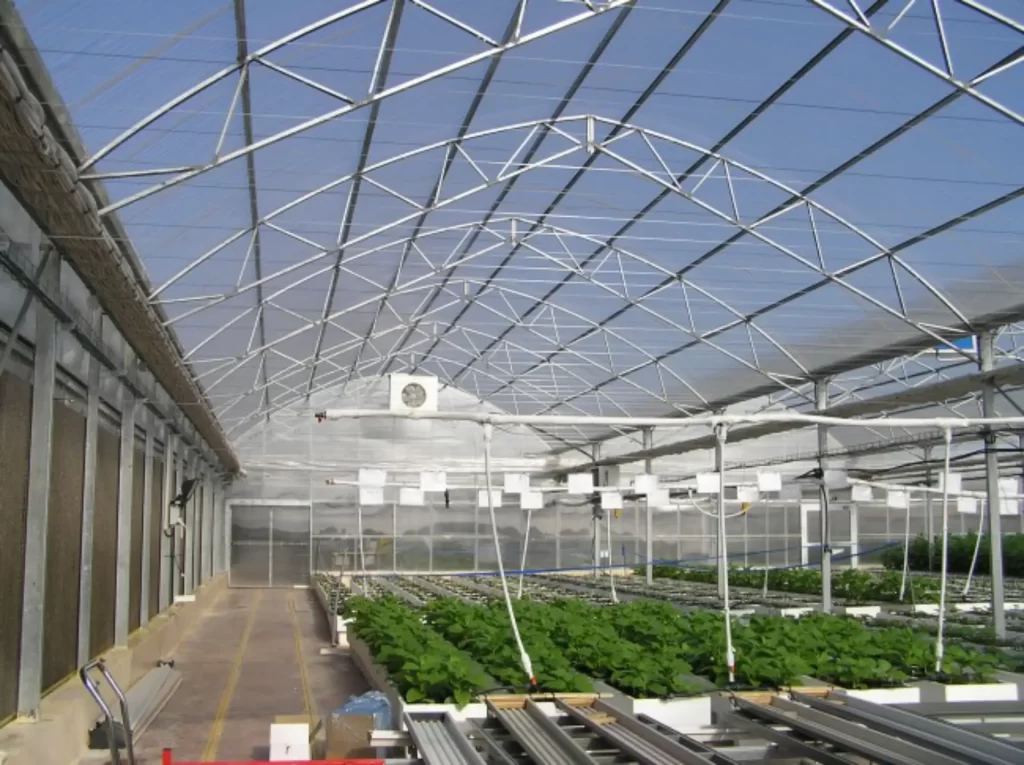
Controlled greenhouses are agricultural structures that allow complete control over growing conditions. Using advanced technologies, growers regulate temperature, humidity and the amount of light. This creates optimal environments for a wide range of crops, tailored to the specific needs of each plant. These greenhouses are also well suited to hydroponic crops, flowers and ornamental plants.
Advantages of Controlled Greenhouses
Controlled greenhouses have a clear advantage in creating ideal growing conditions all year round, independent of the weather outside. The advanced systems operate automatically and allow remote control and immediate adjustment, so a comfortable temperature can be maintained even on hot summer days.
These greenhouses also save resources such as water and fertilizers. The systems distribute them precisely and reduce waste. In addition, controlled greenhouses protect against pests and diseases and provide a safe environment for the plants.
Another advantage is higher revenue. Controlled greenhouses make production more efficient, shorten ripening times and improve crop quality.
Environmental Benefits of Controlled Greenhouses
Controlled greenhouses offer many environmental benefits, for growers and for the environment itself. One of the main benefits is the reduced use of chemical pesticides. In a controlled system, the enclosed environment of the greenhouse protects the crops from pests without relying on large quantities of chemicals. As a result, the risk of soil and water contamination decreases, and growers can produce healthier crops.
These greenhouses also help conserve water, a particularly precious resource in many regions of the world. The smart irrigation systems in controlled greenhouses match the amount of water precisely to the needs of each plant, preventing waste. Some greenhouses also include systems for collecting recycled water, allowing the collected water to be reused in the irrigation process. Together, these systems not only save water but also reduce the growers’ operating costs.
Beyond that, controlled greenhouses reduce the consumption of resources such as fertilizers and fuel, thanks to precise, automated management of the growing process. These systems reduce the need for manual labor and thereby also shrink the carbon footprint of agricultural activity.
Overall, climate-controlled greenhouses improve the energy and ecological efficiency of modern agriculture, while protecting the environment and preserving natural resources.
Applications of Controlled Greenhouses
Controlled greenhouses are used in a variety of fields. They serve commercial agriculture, research and development, and education. Research greenhouses allow precise control of environmental conditions and help researchers study how those conditions affect plants. In education, these greenhouses are used to teach advanced growing systems.
Damti Brothers: Experts in Metal Structures, Complex Constructions and More
Damti Brothers, part of the Trellidor Advanced Industries Group, specializes in building custom-designed greenhouses. We have been operating for 27 years and deliver advanced solutions, with full support from the planning stage through to the erection of the greenhouse. Every project is tailored to the client and includes climate-control and ventilation systems.
Damti Brothers also offers complementary solutions such as growth chambers and cooling systems. Our extensive experience allows us to offer creative, professional solutions to every client.
We serve clients in industry, agriculture and the defense industry. Our clients include Elbit Systems and Cyclone. Damti Brothers is a reliable partner for anyone looking for advanced controlled greenhouse solutions.